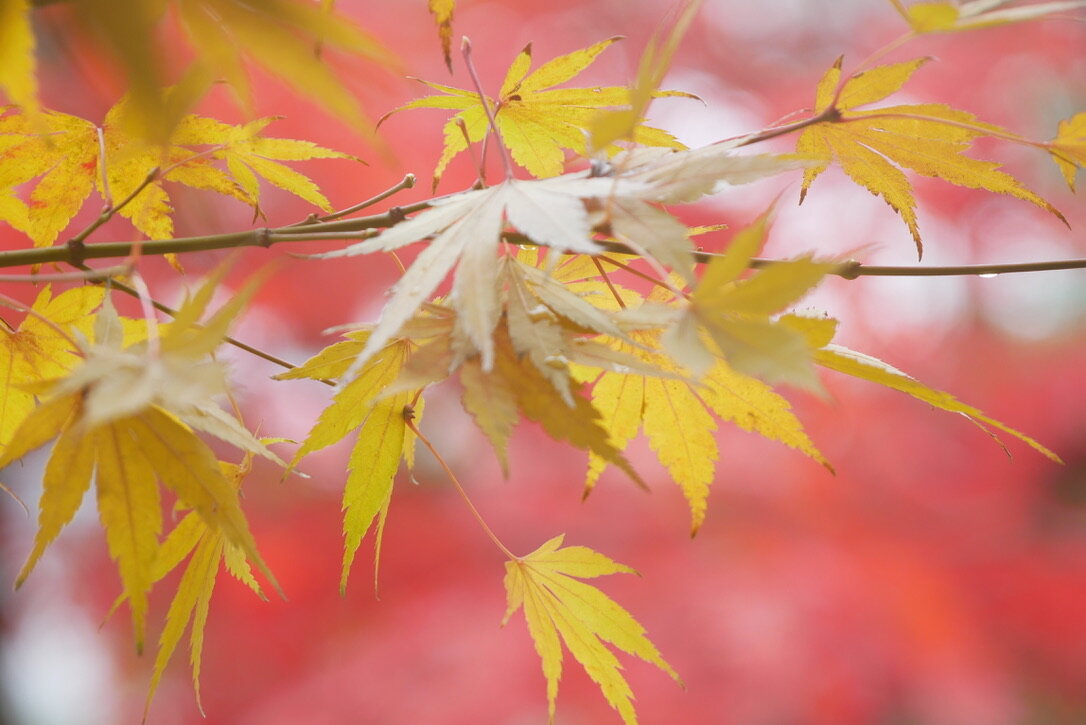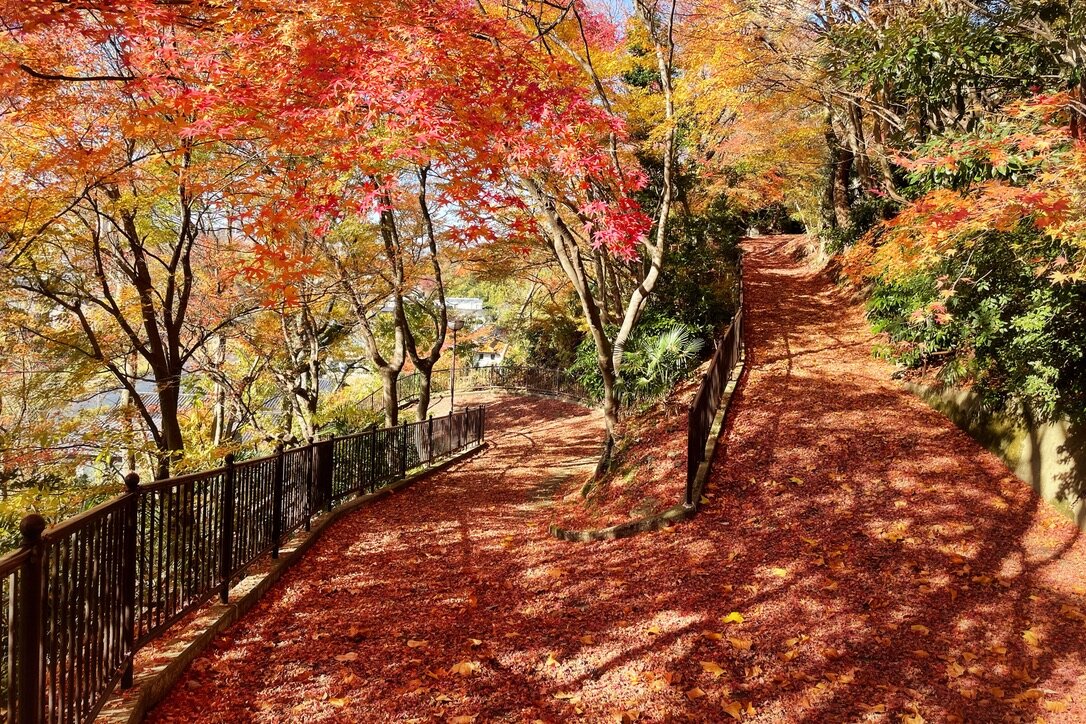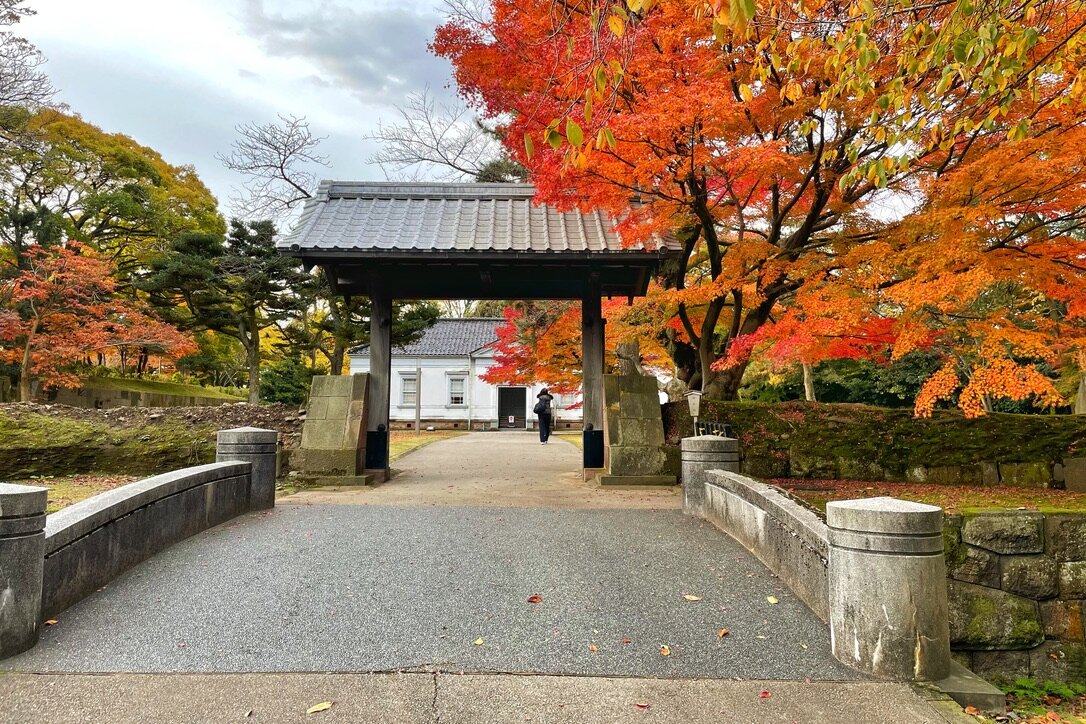
Autumn in Toyama, Ishikawa and Fukui is perfect for portraits among the leaves. Still, many of Hokuriku’s famous foliage spots want a booking or a permit for a model shoot. This guide shows five spots for autumn portraits in Hokuriku, each with its shooting rules.
The rules below are as of November 2026. They can change, so check each official site before you go. For other regions, see our guides to autumn portraits in Tokyo and autumn portraits in Kansai.
When the leaves peak in Hokuriku
In Hokuriku’s lowlands, the leaves usually start to turn in early November. Most famous spots then peak from mid to late November. High in the mountains, as at Tateyama, the leaves are already gone. That’s why this guide picks lowland spots.
For 2026, forecasters expect an average season, or a later one, across Japan. So pick your date from the latest forecast, a week or so before. tenki.jp publishes one, in Japanese.
What to check before an autumn shoot in Hokuriku
At Hokuriku’s famous spots, a model or pre-wedding shoot often needs a booking or a permit. Some places even turn model shoots away on peak weekends.
In particular, check three things:
- whether a model or pre-wedding shoot needs a booking or a permit
- whether shooting is limited on peak weekends or at night
- whether money changes hands, as with a paid shoot
Our photoshoot location guide also covers permission and manners in general.
1. Kenrokuen (Kanazawa, Ishikawa)
Kenrokuen is Hokuriku’s best-known foliage spot. In late autumn, its maples turn red and yellow. From November, you can also frame the yukitsuri, ropes that protect the trees from heavy snow.
- Peak: usually early to late November
- Rules: the garden says shooting, events and similar activities need an application and a permit in advance
- Apply: contact the garden office first, then send the form 60 to 7 days ahead
- But: photography as a business needs the permit too, and some requests are refused. So always ask before a model shoot
- Entry: 320 yen for adults
- Access: 12 minutes by bus from JR Kanazawa to “Kenrokuen-shita/Kanazawa-jo”, then 5 minutes on foot
The garden is also lit up at night, next on November 14, 15, 21, 22, 28 and 29. It opens from 6 to 9 p.m. then, for free. However, to ease the crowds, visitors are asked not to use tripods in the garden or on its bridges. The castle park next door is lit up too, including Gyokusen’inmaru Garden.
Kenrokuen’s visitor guide (official site, Japanese)

2. Natadera (Komatsu, Ishikawa)
Natadera is an old temple, said to date from the Nara period. Above all, you can frame its rocky hill, Kigan Yusenkyo, with the leaves.
- Peak: usually early to late November
- Rules: the temple takes pre-wedding shoots, for weddings or coming-of-age photos. Ask by phone
- But: the official site says nothing about other model shoots, so call the temple first
- Entry: 1,000 yen for adults. The special area, with the study hall and gardens, costs 1,000 yen more
- Hours: 9:15 a.m. to 4 p.m.
- Access: JR Kaga-Onsen, then about 35 minutes on the CANBUS loop bus (Yama line)
The rocky hill has no handrails. So the temple suggests sneakers for the climb.
Natadera’s visitor guide (official site, Japanese)
3. Kakusenkei Gorge (Kaga, Ishikawa)
Kakusenkei is a gorge in Yamanaka Onsen. A 1.3 km path runs from Korogi Bridge to Kurotani Bridge, so you can frame the bridges with the leaves.
- Peak: usually mid-November to early December
- But: the official site says nothing about model shoots or pre-wedding shoots. Ask the Yamanaka Onsen tourism association first
- Highlights: Korogi Bridge, built all in cypress, and the S-shaped Ayatori Bridge
- Riverside terrace: the Kakusenkei kawadoko is open by Ayatori Bridge until November
- Access: JR Kaga-Onsen, then 30 minutes by bus to “Yamanaka Bus Terminal”
According to the tourism association, the color moves upstream, from Kurotani Bridge to Ayatori Bridge, then Korogi Bridge. Ayatori Bridge is also lit up every night. The path follows the gorge, though, so wear good walking shoes.
Kakusenkei’s highlights (Yamanaka Onsen tourism association, Japanese)
4. Yokokan Garden (Fukui)
Yokokan was a villa of the Matsudaira lords of Fukui, with an Edo-period garden. Its tea-house style residence seems to float on the pond, framed by the leaves.
- Peak: usually early November to early December
- Rules: model shoots and pre-wedding shoots need a booking, pro or amateur
- Book: on Fukui City’s booking site, up to 2 weeks before. Booking opens on the 1st of the month two months ahead
- But: no model or pre-wedding shoots on weekends and holidays from November 14 to 29. In October and November, a booking lasts 2 hours at most
- Banned: dresses and other outfits that don’t suit the garden, cosplay, and changing clothes in the garden
- Entry: 220 yen
- Station: Shin-Fukui (Echizen Railway), about 10 minutes on foot
For a date less than 2 weeks away, ask the city’s culture promotion division. Even travel snapshots need an application if you use a tripod or a selfie stick. You also can’t shoot on the stone bridges or around the artificial hill. Until November 29, the garden is lit up on Fridays, weekends and holidays, from 5 to 8:30 p.m.
Yokokan’s shooting rules (Fukui City, Japanese)
5. Takaoka Kojo Park (Takaoka, Toyama)
Takaoka Kojo Park sits on the site of Takaoka Castle, built by Maeda Toshinaga of the Kaga Maeda clan. Above all, you can frame the leaves reflected in its moats.
- Peak: usually mid to late November
- Rules: personal snapshots and similar shoots need no permit
- But: shooting as a business needs a permit and a fee of 440 yen a day. That includes shoots where money changes hands, and shoots for prize contests
- Video: video and drone shoots need a permit too
- Apply: at least 2 weeks ahead, with the city’s Landscape and Greenery Division
- Entry: free
- Station: Takaoka (Ainokaze Toyama Railway), 15 minutes on foot
If you’re unsure whether you need a permit, ask the city first.
Takaoka’s park permits (official site, Japanese)
Temples like Eiheiji: be careful
Many of Hokuriku’s temples are famous for their leaves too. However, temples are places of practice and prayer. For example, Eiheiji in Fukui asks this of its visitors:
- no photos of the priests and monks
- neat, modest clothing, suitable for a place of practice
- respectful behavior, as a participant in religious activities, even if you only came to sightsee
- stay on the wooden corridors, out of the gardens
Its official site says nothing about model shoots or pre-wedding shoots. So treat Eiheiji as a place to enjoy the leaves. If you want to shoot people at another temple, always ask the temple first.
For quieter spots, see our guide to hidden autumn spots in Hokuriku.
Tips for autumn portraits in Hokuriku
- Go early. Famous spots are busy on peak weekends, so arrive right when the gates open
- Enjoy the rain. Wet leaves show deeper colors, and a Japanese umbrella makes a good prop
- Wear calm colors. White, beige and navy stand out against red and yellow leaves
- Start early. In late November, the sun sets in Kanazawa at around 4:40 p.m.
Choose the spot with your model
In autumn, how to get there and where to change matter too. So decide the location together when you plan the shoot. Our first photoshoot guide lists what else to agree on.
Find a partner on MiKiMI, and go shoot this year’s autumn leaves together.