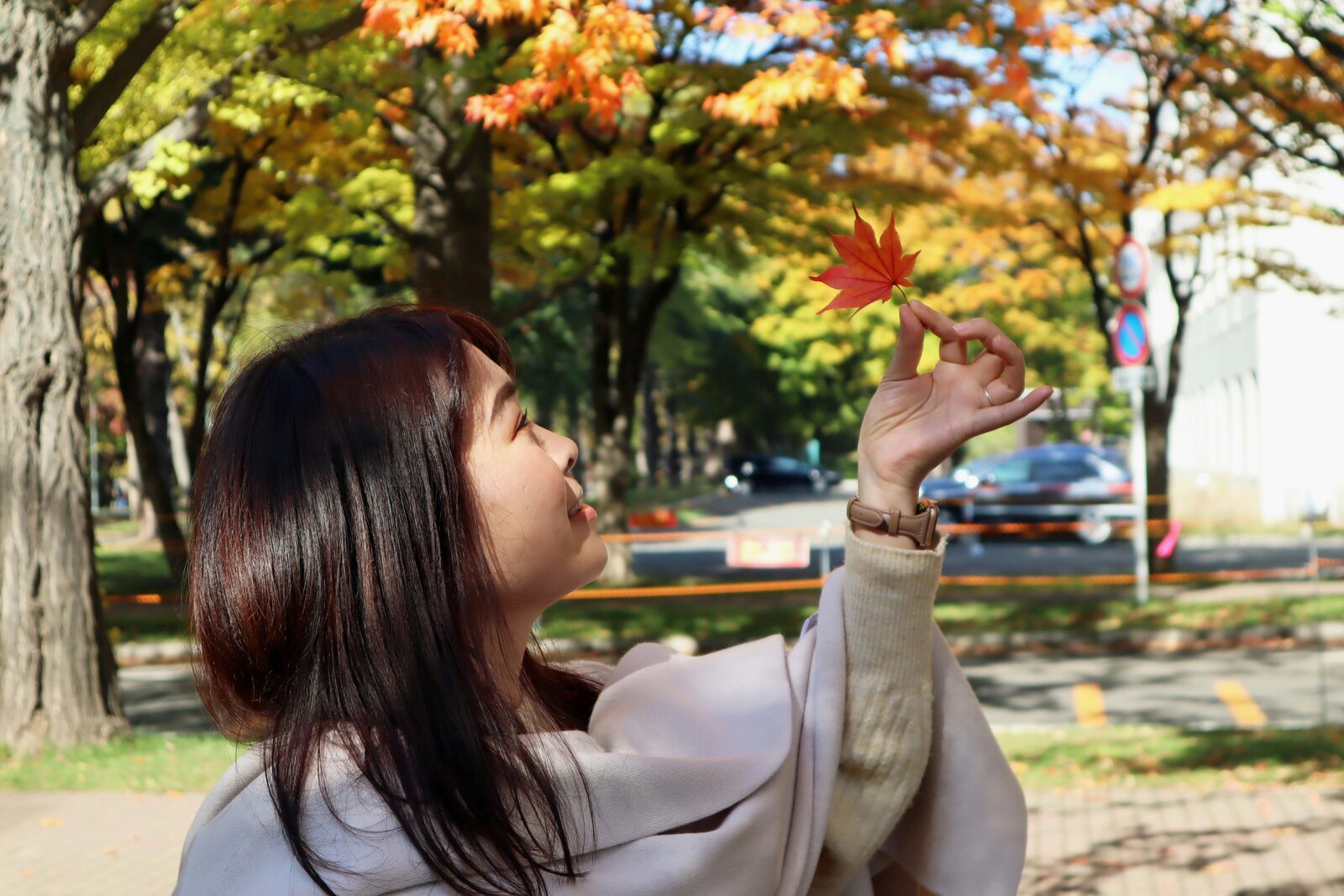
Autumn is one of the best seasons for portraits. Still, some of Tokyo’s famous foliage spots turn model shoots away at peak. This guide shows five parks for autumn portraits in Tokyo, each with its shooting rules.
The rules below are as of October 2026. They can change, so check each official site before you go.
For Kansai, see our guide to autumn portraits in Kansai.
When the leaves peak in Tokyo

Tokyo’s leaves usually peak from mid-November to mid-December. The ginkgo trees turn yellow first, and the maples follow.
For 2026, forecasters expect an average season, or a later one. So pick your date from the latest forecast, a week or so before. tenki.jp publishes one, in Japanese.
What to check before an autumn shoot

Famous foliage spots get very crowded at peak. That’s why some parks tighten their rules for portrait shoots then.
In particular, check three things:
- whether a model shoot needs an application
- whether tripods and reflectors are allowed
- whether money can change hands in the park
Our photoshoot location guide covers permission and manners in general.
1. Showa Kinen Park (Tachikawa)
Showa Kinen Park is a large park where a model shoot needs no application. Its 300 m ginkgo avenue and the maples in its Japanese garden turn in autumn.
- Peak: usually early to late November
- Rules: personal shoots need no application, as long as no money changes hands in the park. Cosplay shoots count too
- Tripods: allowed, but not on narrow paths or where they block other visitors
- Entry: 450 yen for adults
- Station: Nishi-Tachikawa (JR Ome Line), 2 minutes on foot
From October 29 to November 29, the park stays open until 9 p.m. for its autumn festival. The lights come on at 4:30 p.m., so you can also try evening portraits. In addition, the Japanese garden lends free Japanese umbrellas from November 1 to 29. The garden needs its own ticket, though. Note that the park has no changing rooms.
Showa Kinen Park’s shooting rules (official site, Japanese)
2. Shinjuku Gyoen National Garden (Shinjuku)
Shinjuku Gyoen is a wide garden in central Tokyo. Its plane tree avenue, bald cypress wood and maples all turn in autumn.
- Peak: usually late November to mid-December
- Rules: hobby shoots with no money involved need no procedure
- But: from November 1 to 15, 2026, shooting people with tripods or reflectors is banned in the Japanese garden
- Entry: 500 yen for adults
- Hours: 9 a.m. to 4:30 p.m. (last entry 4 p.m.). Closed on Mondays, but open every day from November 1 to 15
- Station: Shinjuku-gyoemmae (Marunouchi Line), 5 minutes on foot
However, paying a professional photographer to shoot you there is not allowed. Swimsuits and other revealing outfits are banned too.
Shinjuku Gyoen’s shooting rules (official site, Japanese)
3. Meiji Jingu Gaien ginkgo avenue (Minato and Shinjuku)
Here, 146 ginkgo trees line a 300 m avenue, one of Tokyo’s best-known autumn views. Also, it is free and open at all times.
- Peak: usually mid-November to early December
- Rules: it is a busy avenue, so shoot handheld and set nothing down
- Station: Gaiemmae or Aoyama-itchome (Tokyo Metro), about 5 minutes on foot
Peak weekends get very crowded. So keep each shot short, and never stop the flow of people. Also, the Meiji Memorial Picture Gallery at the end of the avenue is under repair in 2026, with scaffolding. As a result, the classic shot down the avenue looks different this year.
Note that some road shoots need a police permit. This applies when a shoot, such as a photo session, seriously affects traffic.
The ginkgo avenue (official site, Japanese)
4. Inokashira Park (Musashino and Mitaka)
Maples, ginkgo and bald cypress turn around Inokashira Pond. Above all, you can frame the pond and the leaves together.
- Peak: usually mid-November to early December
- Rules: a shoot with a model and equipment such as a reflector needs an occupancy permit. A simple tripod does not count as equipment
- Apply: at least a week ahead, by fax or email
- But: even with a permit, there are no shoots on weekends, holidays or busy periods, and none on the bridges
- Station: Inokashira-koen (Keio Inokashira Line), 1 minute on foot; Kichijoji, 5 minutes
If you’re not sure whether you need a permit, call the park first.
Inokashira Park’s shooting permits (official site, Japanese)
5. Yoyogi Park (Shibuya)
Right next to Harajuku Station, its ginkgo, maples and zelkova avenue turn in autumn. However, a model shoot needs an application first.
- Peak: usually late November to mid-December
- Rules: model shoots need an application and a permit, whether commercial or not
- Apply: from 1 month to 3 days before the shoot, by email with a short plan
- Fee: from 100 yen an hour (for up to 30 square meters)
- But: only 5 shoots a day on weekends and holidays. Some areas are also closed to shoots for construction
- Station: Harajuku (JR), 3 minutes on foot
Shooting at Yoyogi Park (official site, PDF, Japanese)
Japanese gardens: be careful at peak
Gardens like Rikugien and Koishikawa Korakuen are famous for their autumn colors. However, they restrict portrait shoots during the foliage season.
- Koishikawa Korakuen: no model shoots, or any shoot centered on people, from November 1 to December 20, 2026
- Rikugien: model shoots need an application a week ahead, and a review. In busy periods, they may be refused
- Tonogayato Garden: model shoots need an application, and cosplay is not allowed. No tripods at peak
- Todoroki Valley Park: not accepting shoots for now, because crowds are expected
So treat these gardens as places to enjoy the scenery at peak. For portraits, the parks above are a better choice.
For quieter spots, see our guide to hidden autumn spots in Tokyo.
Tips for autumn portraits in Tokyo
- Go on a weekday morning. Every spot is crowded on peak weekends, and fewer people walk into your frame right after opening
- Wear calm colors. White, beige and navy stand out against red and yellow leaves
- Use backlight. With the sun behind the leaves, they glow
- Start early. In late November, the sun sets in Tokyo at around 4:30 p.m.
Choose the spot with your model
In autumn, how to get there and where to change matter too. So decide the location together when you plan the shoot. Our first photoshoot guide lists what else to agree on.
Find a partner on MiKiMI, and go shoot this year’s autumn leaves together.