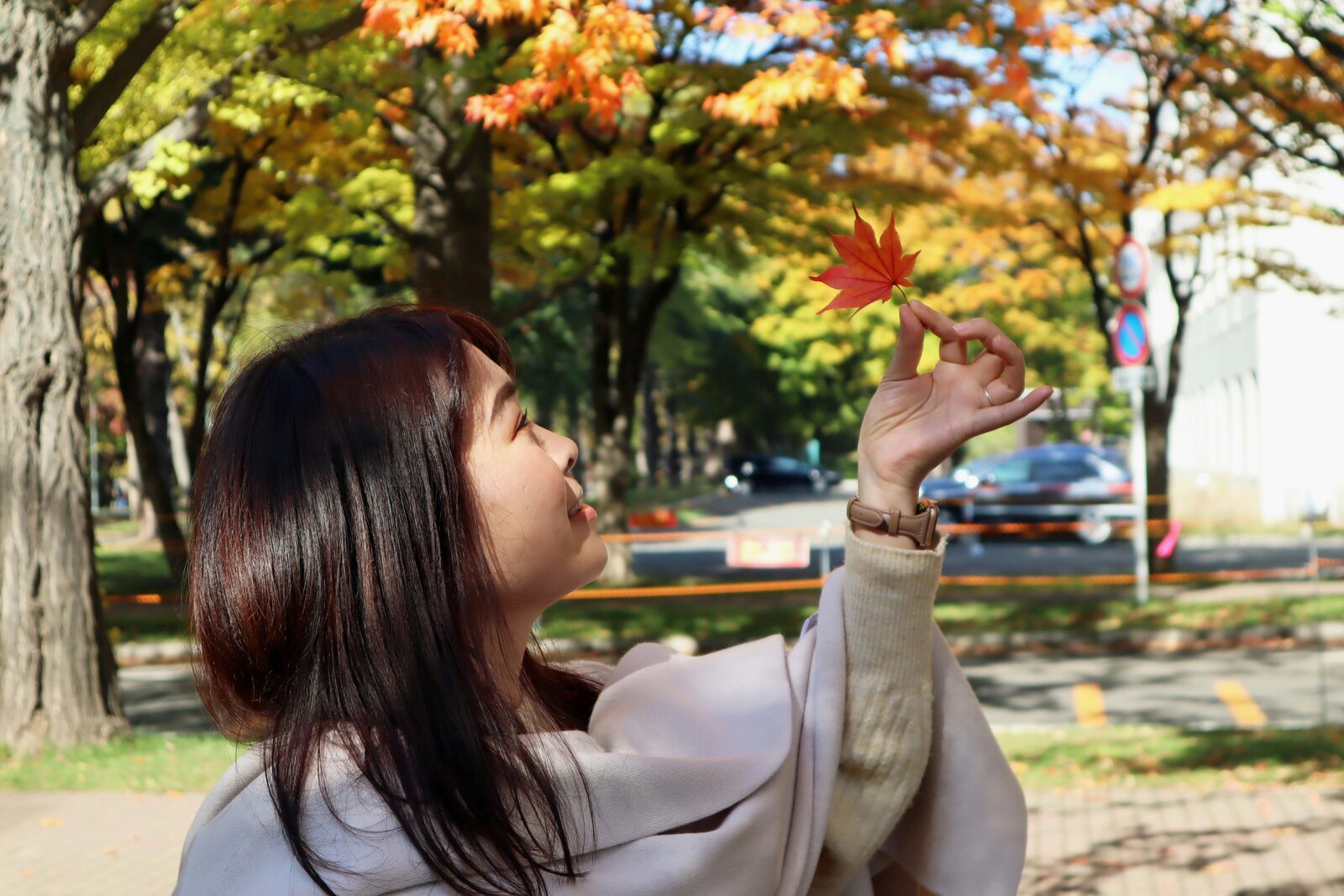
Tokyo’s famous foliage spots are packed on peak weekends. On top of that, some gardens turn portrait shoots away. So this guide shows six hidden autumn spots in Tokyo, each with its shooting rules.
The rules below are as of October 2026. They can change, so check each official site before you go. For the famous spots, see our guide to autumn portraits in Tokyo.
For Kansai, see our guide to hidden autumn spots in Kansai.
Even at a hidden spot, check the rules
Quiet or not, every park has its own shooting rules. In particular, Tokyo’s metropolitan parks and its city or ward parks work differently.
- Metropolitan (都立) parks: a model shoot needs an application and a permit, paid or not
- City and ward parks: some only need a permit when money changes hands
Our photoshoot location guide also covers permission and manners in general.
1. Yakushiike Park (Machida)
Maples and ginkgo turn around Yakushi Pond. Because it is far from central Tokyo, a weekday shoot here is relaxed.
- Peak: usually mid to late November
- Rules: non-commercial shoots need no application
- Tripods: not where they bother other visitors. During the autumn festival, some areas may ban them
- Station: Machida (Odakyu), then about 30 minutes by bus from the north exit to “Yakushiike”
From October 31 to November 29, the park holds its autumn leaves festival. From November 14, it stays open until 8 p.m. with lights. A “sea of clouds” mist also drifts over the pond. However, festival weekends get busy.
Yakushiike Park’s shooting rules (official site, Japanese)
2. Mizumoto Park (Katsushika)
Mizumoto Park is a large metropolitan park full of waterways. In autumn, its dawn redwood forest turns, for photos unlike any other park.
- Peak: usually early November to mid-December (dawn redwoods, poplars)
- Rules: for a model shoot, email or fax a shoot plan at least a week ahead
- But: shoots are allowed on weekdays only, from 9 a.m. to 4 p.m. No reflectors of 1 m by 1 m or larger
- Fee: from 100 yen an hour (for up to 30 square meters)
- Station: Kanamachi (JR or Keisei), then a bus to “Mizumoto Koen” and a 7 minute walk
Note that you can’t shoot on the bridges, such as Mizumoto Bridge, except the Megane Bridge.
Shooting at Mizumoto Park (official PDF, Japanese)
3. Hikarigaoka Park (Nerima)
Hikarigaoka Park is a wide metropolitan park in a residential area. Above all, its ginkgo avenue in the middle of the park is the highlight.
- Peak: usually mid-November to mid-December (ginkgo and others)
- Rules: a model shoot needs an application at least a week ahead. Individuals can apply too
- But: no shoots on the park’s busy days, and only from 9 a.m. to 5 p.m.
- Fee: from 100 yen an hour (for up to 30 square meters)
- Station: Hikarigaoka (Toei Oedo Line), 8 minutes on foot
Unlike Mizumoto Park, you can also apply for a photo shoot on weekends and holidays, unless it’s a busy day.
Hikarigaoka Park’s shooting rules (official site, Japanese)
4. Daigaku-dori in Kunitachi
Daigaku-dori runs straight from the south exit of JR Kunitachi Station, lined with ginkgo trees. Since the avenue is long, you can pick a quieter stretch.
- Peak: usually late November to early December
- Rules: you shoot on the sidewalk, so stay handheld and set nothing down
- But: shoot on the avenue’s sidewalk, not inside the university campus
- Station: Kunitachi (JR Chuo Line), right at the south exit
Note that some road shoots need a police permit. This applies when a shoot, such as a photo session, seriously affects traffic.
5. Ishifune Bridge, Akigawa Valley (Akiruno)
Ishifune Bridge crosses the Akigawa Valley. From here, you can frame the river and the autumn hills together.
- Peak: usually mid-November to early December
- Rules: the local tourism association asks visitors to respect neighbors and other visitors
- But: don’t stay long on the bridge, and keep out of people’s way
- Station: Musashi-Itsukaichi (JR Itsukaichi Line), then a bus to “Jurigi” and a 6 minute walk
The Seoto-no-yu hot spring is about 5 minutes away on foot. So it makes a nice stop after the shoot.
Akigawa Valley leaf reports (Akiruno tourism association, Japanese)
6. Kansen-en Garden (Shinjuku)
Kansen-en is the only stroll garden run by Shinjuku City, right by Omokagebashi tram stop. Its pond and woods feel worlds away from the streets around it.
- Peak: usually late November to early December
- Rules: shoots that bring income or any reward need a permit from Shinjuku City (3,995 yen an hour for photos)
- But: it is a small garden, so keep each shot short and out of walkers’ way
- Station: Omokagebashi (Toden Arakawa Line), 1 minute; Waseda (Tokyo Metro), about 7 minutes
Shooting in Shinjuku’s parks (official site, Japanese)
Tips for hidden autumn spots in Tokyo
- Go on a weekday. Even hidden spots get busier on peak weekends
- Wear calm colors. White, beige and navy stand out against red and yellow leaves
- Start early. In late November, the sun sets in Tokyo at around 4:30 p.m.
- Wear comfortable shoes. Valleys and big parks take time to walk around
Choose the spot with your model
Hidden spots are often far from the station. So decide the location together when you plan the shoot, including how to get there and where to change. Our first photoshoot guide lists what else to agree on.
Find a partner on MiKiMI, and go shoot this year’s autumn leaves together.