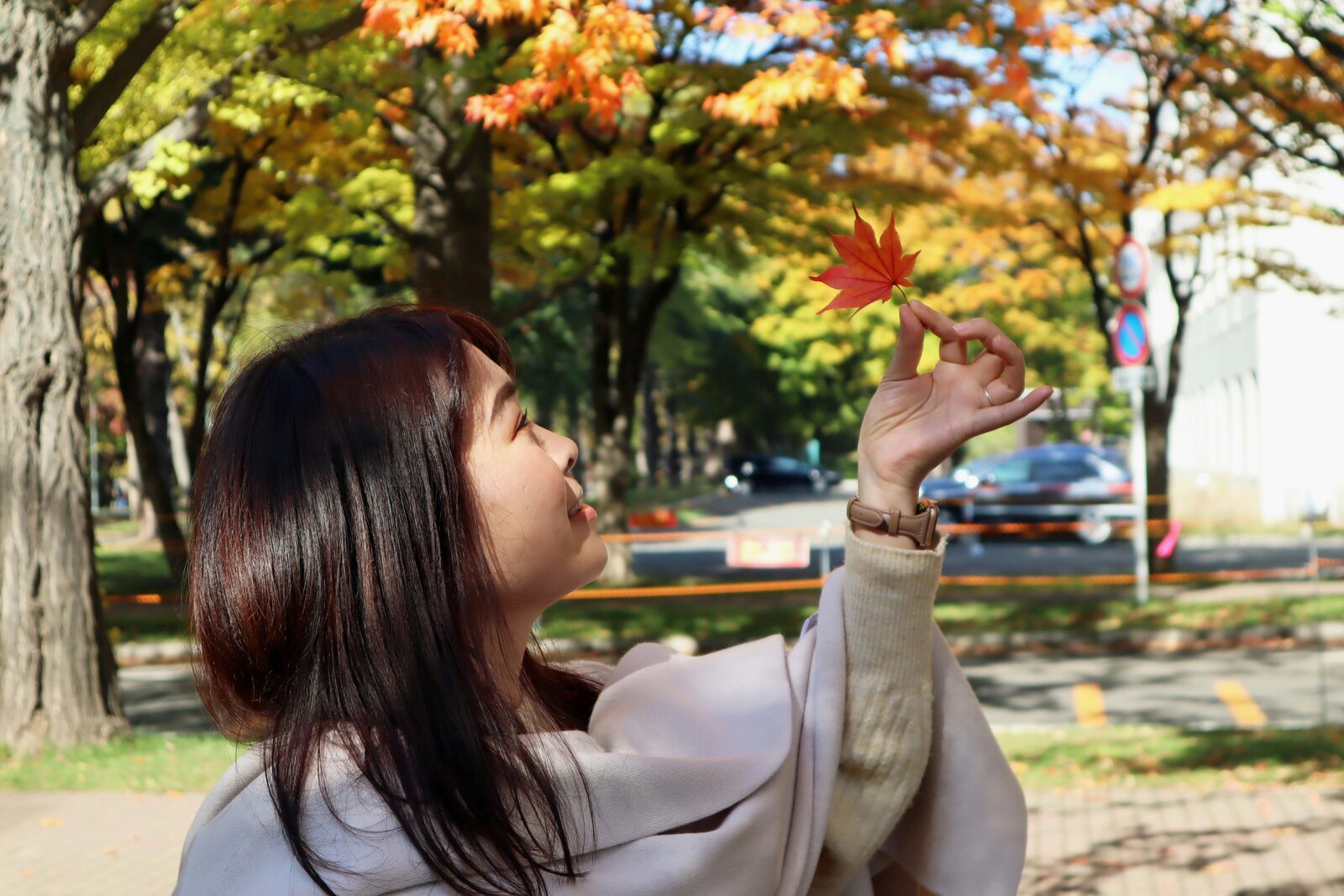
Kyoto’s famous foliage spots get very crowded at peak. On top of that, quite a few temples turn model shoots away. So this guide shows six hidden autumn spots in Kansai, each with its shooting rules.
The rules below are as of October 2026. They can change, so check each official site before you go. For the famous spots, see our guide to autumn portraits in Kansai.
For Tokyo, see our guide to hidden autumn spots in Tokyo.
Even at a hidden spot, check the rules
Quiet or not, every place has its own shooting rules. For example, most of Kansai’s parks only ask for a permit when money changes hands. Temples, on the other hand, often set their own limits on tripods and model shoots.
Our photoshoot location guide also covers permission and manners in general.
1. Hattori Ryokuchi Park (Toyonaka, Osaka)
Hattori Ryokuchi is a large prefectural park in northern Osaka. Since it is so big, you can pick a quiet corner.
- Peak: usually late November to early December
- Rules: personal, non-commercial shoots in small groups need no application and no fee
- Cosplay: small hobby shoots need no procedure
- Changing: use the changing room at the tennis center (9 a.m. to 5 p.m.)
- Station: Ryokuchi-koen (Kita-Osaka Kyuko), 5 minutes on foot
However, commercial shoots, such as a paid pre-wedding shoot, need an application and a fee. The park also asks visitors not to bring props that look like knives or guns.
Hattori Ryokuchi’s FAQ (official site, Japanese)
2. Kobe Municipal Arboretum (Kita, Kobe)
This arboretum sits in the forests of Mt. Rokko, with trees from around the world. In autumn, it holds its maple walk season.
- Maple walk: October 31 to December 6
- Rules: large photo sessions, commercial shoots, and shoots with a hired photographer or staff need an application
- Pre-wedding shoots: allowed with an application
- Cosplay: allowed if you call ahead
- But: there is nowhere to change, and changing in the parking lot or toilets is not allowed
- Station: Kita-Suzurandai (Kobe Electric Railway), then about 10 minutes by free shuttle bus
On weekends and holidays during the maple walk, the access roads get very crowded. So the train and the shuttle bus are the better choice.
The arboretum’s FAQ (official site, Japanese)
3. Yoshimine-dera (Nishikyo, Kyoto)
Yoshimine-dera sits halfway up the Nishiyama hills, with a view over Kyoto. According to the temple, the parking wait is only about 5 minutes, even on autumn weekends.
- Peak: mid-November to early December
- Rules: shoots in wedding clothes, commercial shoots, and shoots with lights, panels or props need an application
- But: no cosplay shoots. On weekends and holidays from November 10 to 30, no tripods or monopods either
- Entry: 500 yen for adults
- Access: bus from JR Mukomachi or other stations to “Haikata”, then about 43 minutes on foot
However, the direct bus to the temple was cut in 2025. So a taxi or a car is the easier way.
Yoshimine-dera’s visitor guide (official site, Japanese)
4. Mimuroto-ji (Uji, Kyoto)
Mimuroto-ji calls itself a hidden spot for autumn leaves. The maples around its three-story pagoda are the highlight.
- Peak: late November to early December
- Rules: no tripods
- But: the official site says nothing about model or pre-wedding shoots, so call the temple first
- Entry: 1,000 yen for adults. Open from 8:30 a.m. to 3:10 p.m.
- Station: Mimurodo (Keihan Line), 15 minutes on foot
Because it closes early, start your shoot in the morning.
Mimuroto-ji’s visitor guide (official site, Japanese)
5. Momiji Valley, Settsukyo Gorge (Takatsuki, Osaka)
Takatsuki’s tourism association calls this gorge a little-known foliage spot in northern Osaka. From the valley floor, the leaves fill the sky above you.
- Peak: usually late November to early December
- Rules: shooting as a business in Settsukyo Park needs a permit from Takatsuki City
- But: the gorge is rocky, so wear good walking shoes
- Station: JR Takatsuki, then a city bus from the north exit to “Tsukawaki” and a 10 minute walk
Settsukyo’s highlights (Takatsuki tourism association, Japanese)
6. Shoryaku-ji (Nara)
Shoryaku-ji has more than 3,000 maple trees. In autumn, this mountain temple turns the colors of brocade.
- Peak: usually mid-November to early December
- Rules: you can shoot outside the buildings, but tripods are banned. No shooting inside the main hall or Fukuju-in
- But: the official site says nothing about model or pre-wedding shoots, so ask first
- Special opening: from November 3 to December 6, a special entry fee applies. Until November 12, the main hall’s grounds are closed
- Access: from November 14 to 29, a temporary bus runs daily from JR Nara and Kintetsu-Nara stations
Shoryaku-ji’s autumn leaves (official site, Japanese)
Quiet temples that refuse shoots
Even quiet temples may turn model shoots away. For example, these two say so officially.
- Yanagidani Kannon (Yokoku-ji, Nagaokakyo): in principle, it does not accept photo sessions or model shoots from individuals. It also refuses tripods, reflectors and similar gear, in principle
- Kyorinbo (Omihachiman, Shiga): it refuses wedding and coming-of-age pre-shoots on its autumn opening days, because of the crowds
So even at a quiet temple, always ask before a portrait shoot.
Tips for hidden autumn spots in Kansai
- Go on a weekday. Even hidden spots get busier on peak weekends
- Wear calm colors. White, beige and navy stand out against red and yellow leaves
- Start early. In late November, the sun sets in Kyoto at around 4:45 p.m., and earlier in the mountains
- Check transport. Buses to mountain temples can be rare
Choose the spot with your model
Hidden spots are often far from the station. So decide the location together when you plan the shoot, including how to get there and where to change. Our first photoshoot guide lists what else to agree on.
Find a partner on MiKiMI, and go shoot this year’s autumn leaves together.